
Thinking about tapping into your home’s value with a Home Equity Line of Credit (HELOC)? Before you get excited, it’s crucial to know exactly what it takes to qualify.
You might wonder, “Do I have enough equity? Is my credit score good enough? What about my income or debts? ” Knowing the answers to these questions can save you time, stress, and even protect your credit. You’ll discover the key HELOC qualification requirements that lenders look for.
By understanding these simple yet important criteria, you’ll be better prepared to get approved and access the funds you need when you need them. Ready to find out if you meet the mark? Let’s dive in!
Key Credit Score Criteria
The minimum credit score required for a HELOC usually ranges from 620 to 700. Lenders prefer scores that show you are responsible with credit. A higher score can mean better loan terms and lower interest rates.
Your credit history plays a big role. Lenders look for a history of on-time payments and low balances on other loans. Late payments or defaults can lower your chances of approval.
Improving your credit before applying helps. Pay down existing debts and avoid new credit cards. Check your credit report for errors and fix them quickly. This can raise your score and improve your application.

Home Equity Requirements
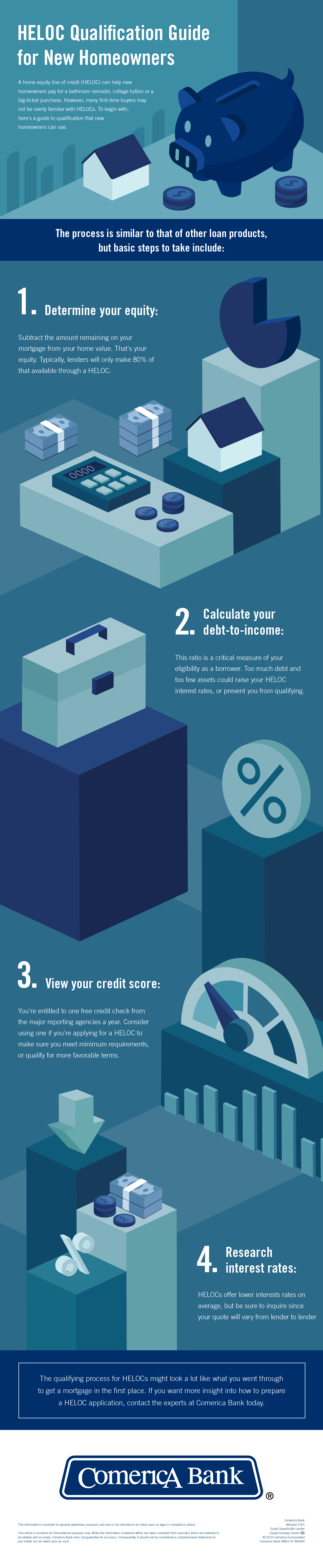
Calculating available equity means figuring out how much value you have in your home. Subtract any existing mortgage balance from your home’s current market value. The result is your available equity that you can borrow against.
Loan-to-value (LTV) ratio limits set how much lenders will allow you to borrow. Most lenders allow up to 80% LTV. This means you can borrow up to 80% of your home’s value minus what you owe on your mortgage.
Increasing home equity is possible by paying down your mortgage faster or improving your home’s value through renovations. Both methods raise the amount you can borrow for a HELOC.
Income And Employment Proof
To prove income and employment for a HELOC, provide recent pay stubs, W-2 forms, and tax returns. Lenders want to see steady income over time. A letter from your employer can also help confirm your job status.
Stable income means consistent earnings from the same job or source. Lenders like to see at least two years of steady income. Gaps or sudden changes might cause issues.
Self-employed borrowers face extra steps. They should provide two years of tax returns, profit and loss statements, and sometimes bank statements. This helps lenders understand their true earnings.

Debt-to-income Ratio Limits
Debt-to-Income (DTI) ratio is a key factor lenders check for HELOC approval. The ideal DTI range usually falls between 28% and 43%. Keeping your DTI below 43% increases chances of qualifying. Lower DTI shows you have enough income to cover debts and new loan payments.
Reducing your debt load can improve your DTI. Pay off credit cards, personal loans, or other debts before applying. This makes your financial profile stronger and more attractive to lenders.
| DTI Calculation Method | What It Includes |
|---|---|
| Front-End Ratio | Monthly housing costs divided by gross income |
| Back-End Ratio | All monthly debts divided by gross income |
Homeowners Insurance And Appraisal
Homeowners insurance protects your property and is required for a HELOC. Lenders want to see enough coverage to cover the home’s value. This ensures their investment is safe from damage or loss.
The home appraisal helps lenders know the current market value of your house. It shows how much equity you have. A higher appraisal means you might qualify for a larger HELOC.
Sometimes, appraisal results can be disputed. You can request a second appraisal or provide evidence of home improvements. Resolving disputes quickly helps avoid delays in loan approval.
Lender-specific Rules
Lenders have different rules for HELOC approval. Some require a minimum credit score, while others focus on your income and debt ratio. These varied guidelines affect your chances to qualify.
Loan limits depend on the lender and the value of your home. Most lenders allow borrowing up to 80% of your home’s equity, but this can change. Knowing your lender’s limit helps plan your loan.
Fees and costs can include application fees, appraisal fees, and closing costs. Some lenders charge annual fees or early termination fees. Understanding these helps avoid surprises.
Common Disqualification Factors
Credit problems can stop HELOC approval. Late payments, collections, or bankruptcies lower your score. A low credit score makes lenders say no.
Equity in your home must be enough. Lenders want to see at least 15% to 20% equity left after the loan. Not enough equity means no loan.
Income must be steady and enough. Lenders check pay stubs, tax returns, or bank statements. Unstable or low income raises red flags and can disqualify you.
Steps To Prepare For Approval
Gathering all necessary documents helps speed up the approval process. Documents such as proof of income, credit reports, and homeownership papers are essential. Organize bank statements, tax returns, and insurance details carefully.
Improving your financial health raises chances of approval. Pay down existing debts to lower your debt-to-income ratio. Make sure your credit score is in good standing by paying bills on time. Saving money for a larger down payment can also help.
Choosing the right lender is key. Compare interest rates, fees, and terms. Look for lenders with flexible qualification requirements. Some may accept lower credit scores or higher debt ratios. Check lender reviews and customer service reputation before deciding.
Frequently Asked Questions
What Disqualifies You For A Heloc?
Low credit score, insufficient home equity, high debt-to-income ratio, unstable income, or lack of homeowner’s insurance disqualify you for a HELOC.
How Much Would A $50,000 Heloc Cost Per Month?
A $50,000 HELOC monthly cost depends on the interest rate and repayment term. For example, at 6% interest, payments could be around $250. Actual costs vary by lender, rates, and loan terms. Check your lender’s calculator for precise monthly payment estimates.
How Much Do I Have To Make To Qualify For A $400,000 Home Loan?
To qualify for a $400,000 home loan, you typically need a gross annual income of about $100,000 to $120,000. Lenders also consider credit score, debt-to-income ratio, and down payment size. Exact requirements vary by lender and loan type.
What Are The Qualifications To Get Approved For A Heloc?
To get approved for a HELOC, you need sufficient home equity, a good credit score, stable income, low debt-to-income ratio, and proof of homeowners insurance.
Conclusion
Qualifying for a HELOC requires meeting several key factors. Lenders look for good credit scores and steady income. They check your home equity and debt levels too. Having a solid payment history helps your chances. Proof of homeowners insurance is also necessary.
Understanding these requirements can guide your preparation. Take time to gather all needed documents. This makes the approval process smoother and faster. Stay informed to make smart borrowing decisions. A HELOC can be a helpful financial tool when used wisely.
Read More
- Second Charge Loan Quote: Unlock Lower Rates Fast Today
- Variable Heloc Payment Estimate: Quick Tips for Accurate Planning
- Home Equity Refinance Quote: Unlock Savings with Top Rates Today
- Equity Release Quote Calculator: Unlock Your Home’s True Value Today
- Home Equity Loan Quotes: Unlock Best Rates and Save Big Today
- Equity Cash Out Refinance: Unlock Wealth with Smart Home Loans
- Home Equity Credit Line Rates: Unlock Top Savings Today
- Property Equity Loan Estimate: Unlock Savings with Smart Tips
- Fixed Equity Loan Apr: Unlock Stable Rates for Smart Savings
- Heloc Rate Quote Comparison: Find the Best Deals Fast